Meet the people behind Rotterdam Chinatown:
Kawing en Yin – Chinatown Dimsum Restaurant
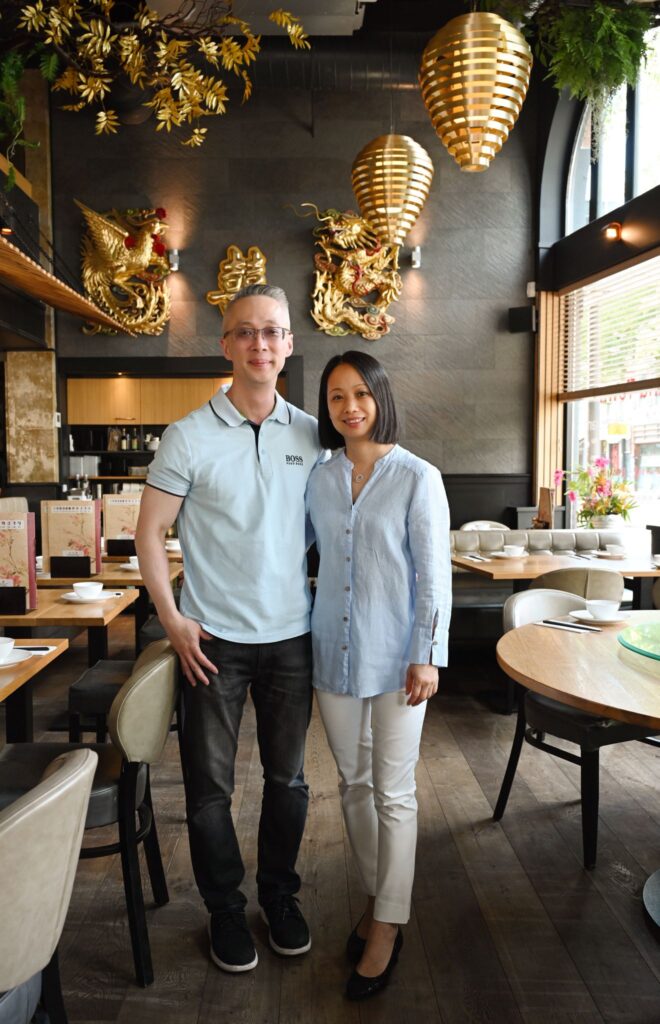
What’s a Chinatown without a proper dim sum restaurant? And how fitting that there’s one simply named after its location: Chinatown Dimsum Restaurant. It sits prominently on the corner of the street, right on the route from Rotterdam Central Station to the city center, impossible to miss.
The face of the restaurant is Kawing, a Chinese man who reminds you of your old math teacher. He’s been running the place since it first opened in 2016. But long before Chinatown Dimsum settled here, the location housed Sumo, and before that, the well-known King’s Garden restaurant. Kawing was already familiar with the place back then, his wife Yin worked at King’s Garden. You could say the location has a long history, which gives it special meaning for the couple. No matter how challenging it is these days to run a restaurant of this quality and variety, they’re committed to keeping it going. If they ever step away, their one condition is that the next owner must continue serving authentic Chinese food.
Thankfully, that day hasn’t come yet. Kawing and Yin work hard every day to provide their loyal customers with care and top-quality food. Kawing calls his wife one of the hardest-working people he knows. She never slows down, only the best is good enough. Yin even learned to cook, and does everything from folding dim sum to washing dishes, simply because sometimes someone is sick, or there’s not enough staff. She frequently travels to Hong Kong to learn more and keep up with the latest trends.
What Kawing won’t tell you himself is that he’s one of the most charming and welcoming hosts you’ll ever meet. He recognizes regulars instantly and treats them like old friends. He shows warmth, like a friendly Chinese uncle who’ll even give young visitors a gentle pat on the head. He’s always busy, but you’ll never see him stressed.
Ask them what the restaurant’s specialty is, and they’ll name many popular dishes — but the Peking duck with pancakes remains a guest favorite.
One major decision they made in recent years is to stop taking reservations. In that way, they avoid turning away walk-ins while reserved tables sit empty. It takes some getting used to, but no one has ever complained. As Kawing puts it, “We never turn guests away.” If needed, they’ll seat people together, and open the upstairs floor when it gets really busy.
The only times they truly have to say no are during major events in the area, like Chinese New Year or the Rotterdam Film Festival, when nearly every restaurant in Chinatown is completely full.
———-
Arjan – Wah Nam Hong
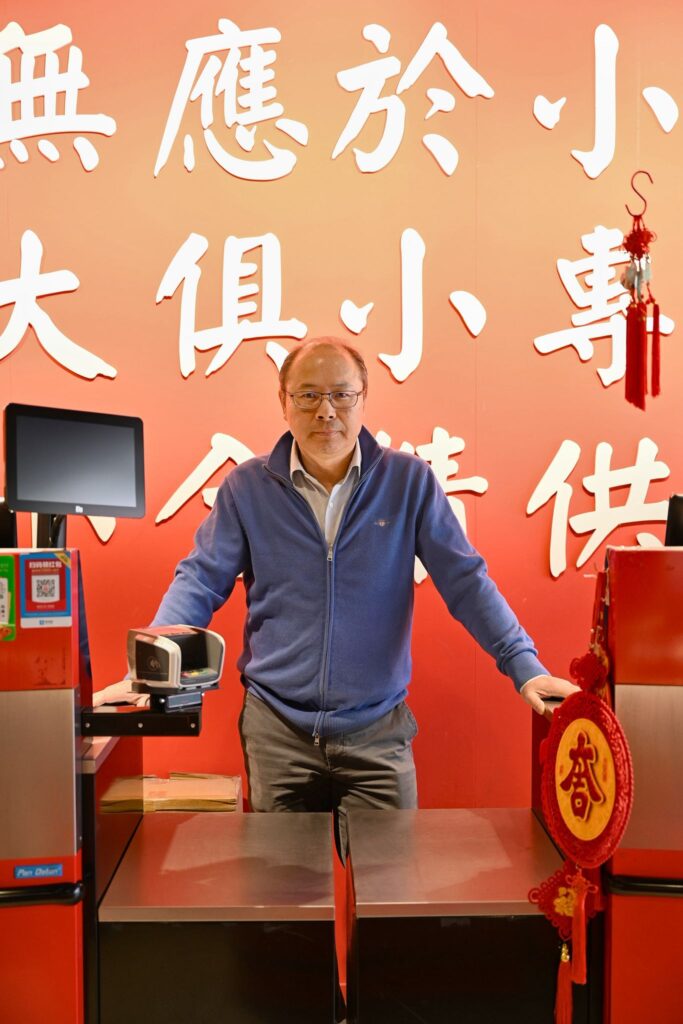
The history of Wah Nam Hong dates back over fifty years. The first store opened in Amsterdam in 1974. Forty years ago, a second branch was established on West Kruiskade in Rotterdam, still at the exact same location today. That makes Wah Nam Hong the oldest Chinese supermarket in Rotterdam.
Arjan and his sister took over the business from their father, who originally built the Wah Nam Hong empire together with his brother. In the 1960s, Arjan’s father moved to the Netherlands at the request of relatives to help out in the family restaurant, then called Wah Nam (“South China”, the family’s region of origin).
What began as a restaurant eventually expanded into the Wah Nam Hong supermarket chain. Today, Arjan manages the stores in Rotterdam and The Hague, with support from his sister.
Their private label, Kirin, offers high-quality products at great value. A few years ago, they also launched their own line of teas. Arjan’s sister, Sinyan, is a certified tea sommelier who wanted to make premium-quality tea accessible in a Chinese supermarket. All teas are organic and beautifully packaged in elegant tins.
Though Arjan may come across as a tough businessman, he has a warm, social side. For many years, he’s served as chairman of the foundation that organizes Rotterdam’s annual Chinese New Year celebration. The little free time he has, he dedicates to giving back to the Chinese community.
He takes this volunteer role seriously, chairing dozens of meetings each year with cultural partners across the city. His understanding of both Chinese and Dutch customs makes him a natural bridge-builder between cultures.
———-
Chao – My Fong
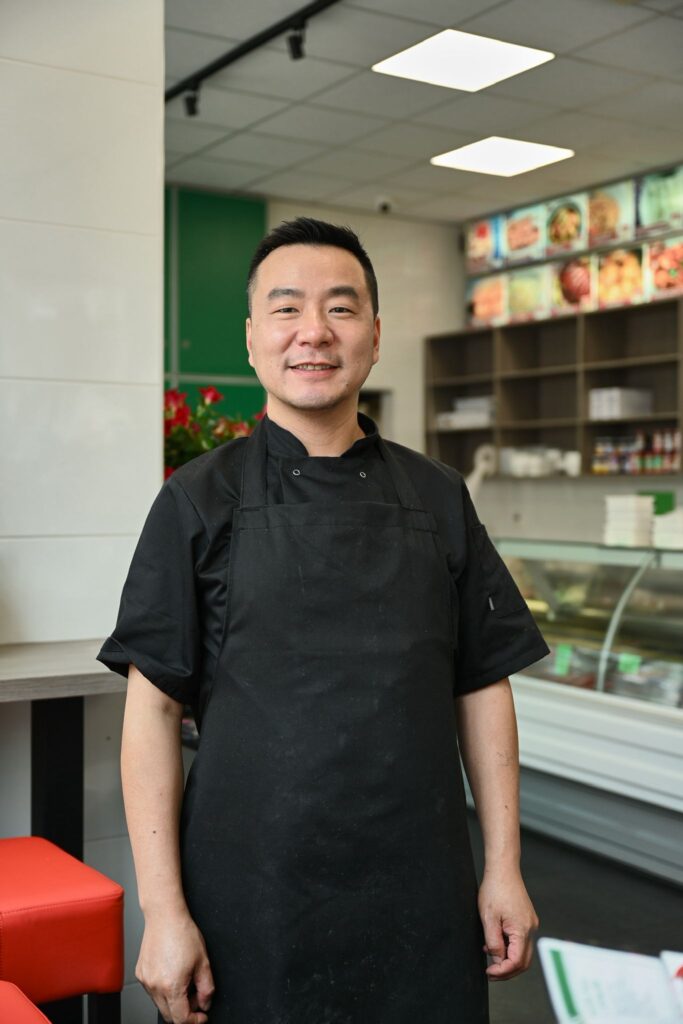
For many people in the Chinese community, My Fong is an indispensable part of Rotterdam’s culinary scene. The restaurant is famous for its roasted duck, bowls of noodles, homemade buns, and fresh ho fan noodles. After 35 years, My Fong had truly earned its reputation, attracting families not only from Rotterdam but also from surrounding areas who came specifically to buy their delicious roasted meats.
A few years ago, the business faced some challenges. The ownership changed, and the building was in need of renovation. However, My Fong managed to recover, showing a clear commitment to maintaining the high standards that customers expect. Interestingly, the iconic green sign above the door remained unchanged, even after the new owner, Chao Chi, took over and added his own brand alongside it: Aunt Thirteen (Shi San Yi).
Chao chose to keep the original sign deliberately, seeing it as a piece of cultural heritage. The name Aunt Thirteen might sound unusual to those unfamiliar with Chinese culture, but within the community, it immediately evokes associations of good fortune and helpfulness. The term comes from the Chinese film industry and has gradually entered everyday language to describe someone who is always ready to lend a hand.
Chao has a good sense of humor and a passion for Chinese cinema, but above all, he is a astute entrepreneur who seizes opportunities. Before moving to the Netherlands, he spent several years living in Italy, working in import and export. After moving to the Netherlands, he soon realized that many Chinese migrants here work in the restaurant industry. So he became a sushi chef, which explains why My Fong now also offers freshly made sushi prepared personally by Chao himself.
Under his leadership, My Fong underwent a subtle transformation. He introduced high bar stools and created a separate entrance designed for customers looking for a quick meal. Since Chao originally comes from Wenzhou, he also brought in a selection of Wenzhounese cold dishes, a style of dim sum unique to that region. It’s fair to say that these dishes are virtually impossible to find fresh anywhere else in the Netherlands, making Thirteen Aunt– My Fong truly one of a kind.
———-
Nisya – Waroeng Emjay
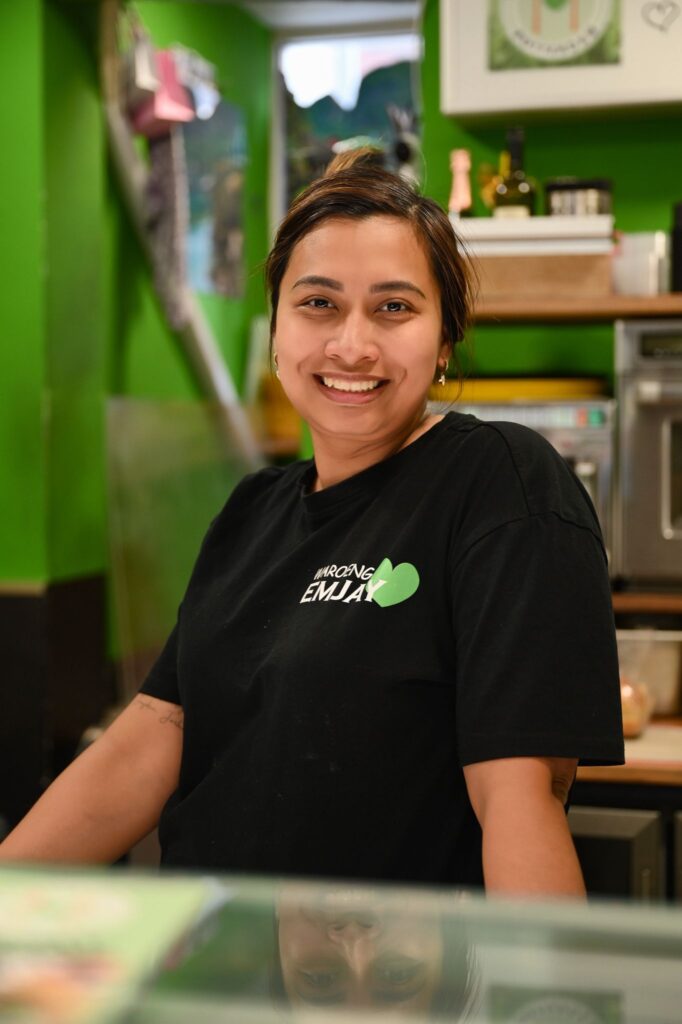
Nisya moved from Indonesia to the Netherlands at the age of ten. She grew up in Zeeland and later studied Applied Psychology in Leiden. Unable to find student housing there, she ended up renting a room in Rotterdam. Throughout her studies, she worked in hospitality, a field she already knew from her teenage years helping out in a Chinese wok restaurant. Still, she never imagined she’d end up in the food business.
During the COVID lockdowns, stuck at home, Nisya began experimenting with family recipes. From her own kitchen, Waroeng Emjay was born, named after her children, Emily and Jayden. Though she never saw herself as a great cook, with help from her mother and grandmother, and by trusting her instincts, she turned family dishes into delicious, authentic meals now served at Emjay.
Emjay quickly stood out. Authentic Indonesian food had become rare in central Rotterdam. Her customers now come from all over the Netherlands, and even abroad, to taste her cooking.
Like many Indonesian dishes, the food requires long, careful preparation, sometimes days in advance. To make time for family, they close the restaurant every Wednesday.
Their specialties include Baso (a traditional meatball soup) and Ayam Penyet (grilled chicken with fresh sambal). These dishes are rarely made at home due to their complexity. Nisya describes her food best as authentic Indonesian street food: rich in tradition, flavor, and soul.
———-
Ka Chun – Takumi
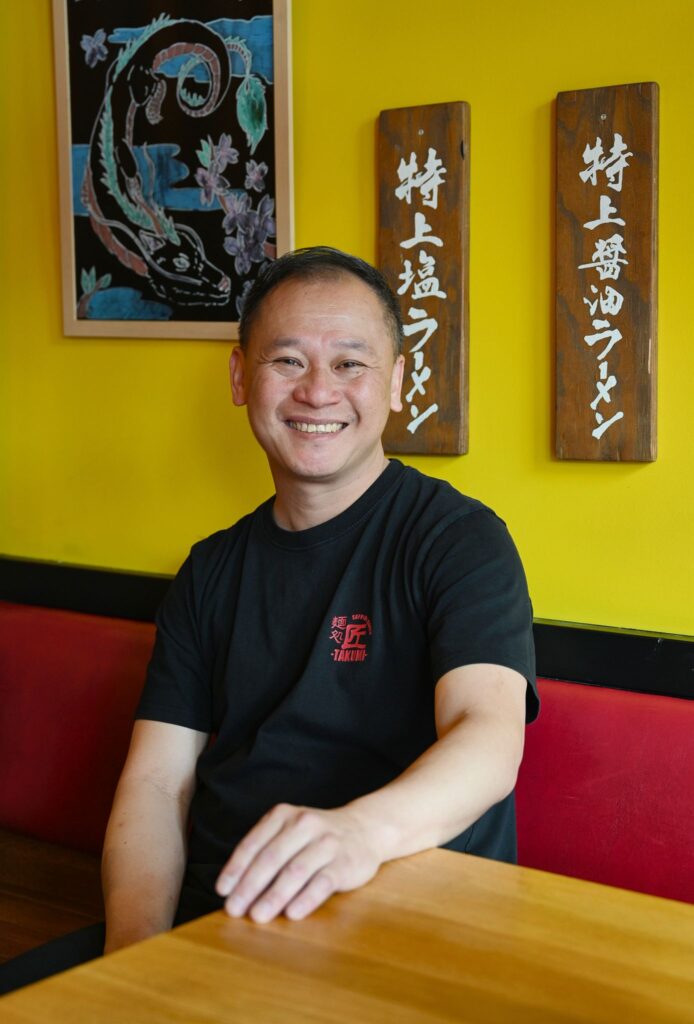
Takumi has been a hotspot on West Kruiskade in Rotterdam for over eight years. Originally flown in from Düsseldorf, where the success of Takumi Ramen was unmatched, the Rotterdam branch was an instant hit. Fans who already knew Takumi from Germany were thrilled they could finally enjoy these ramen dishes in Rotterdam too. Unsurprisingly, there was always a line out the door.
The space was small, but the quality was next-level.
Today, Takumi has multiple locations in Rotterdam, and the West Kruiskade branch has also grown. Still, quality and flavor remain uncompromised.
Ka Chun Cheng now manages both Takumi in the Markthal and the one on West Kruiskade. He has been involved with Takumi since day one.
As a teenager, Ka Chun moved from Hong Kong to the Netherlands in 1990. He studied Electrical Engineering but soon found himself drawn into the Chinatown scene in Rotterdam. His first job was at a telecom company run by his cousin on West Kruiskade. When the rise of online stores disrupted that industry, he was laid off and unemployed for a few months.
Through the Chinese community, he soon found his way into the hospitality world. He started as a chef at the very first Sumo restaurants in Rotterdam, working hard to master every aspect of the job. His dedication and leadership skills quickly stood out, and he was recommended to help launch Takumi. To prepare, he trained for several months in Düsseldorf.
Ka Chun is a true all-rounder: washing dishes, cooking, serving, hosting, he does it all. He even drops off the laundry himself from time to time. He knows what hard work means and values his team deeply. To him, they’re not just employees, they’re family. A tight-knit group that supports one another. That sense of harmony and trust is something he works hard to preserve.
Guests are also very dear to him. The current menu is the result of countless tastings and experiments with guests’ favorite dishes.
Every Takumi serves ramen noodles made in a specialty ramen factory in Japan, but the delicious eggs and char siu are prepared fresh, in-house, by the chefs themselves. Freshness and authenticity are what guarantee the quality.
For Ka Chun, ramen has truly become a passion.
———-
Cindy – CiLi Hair
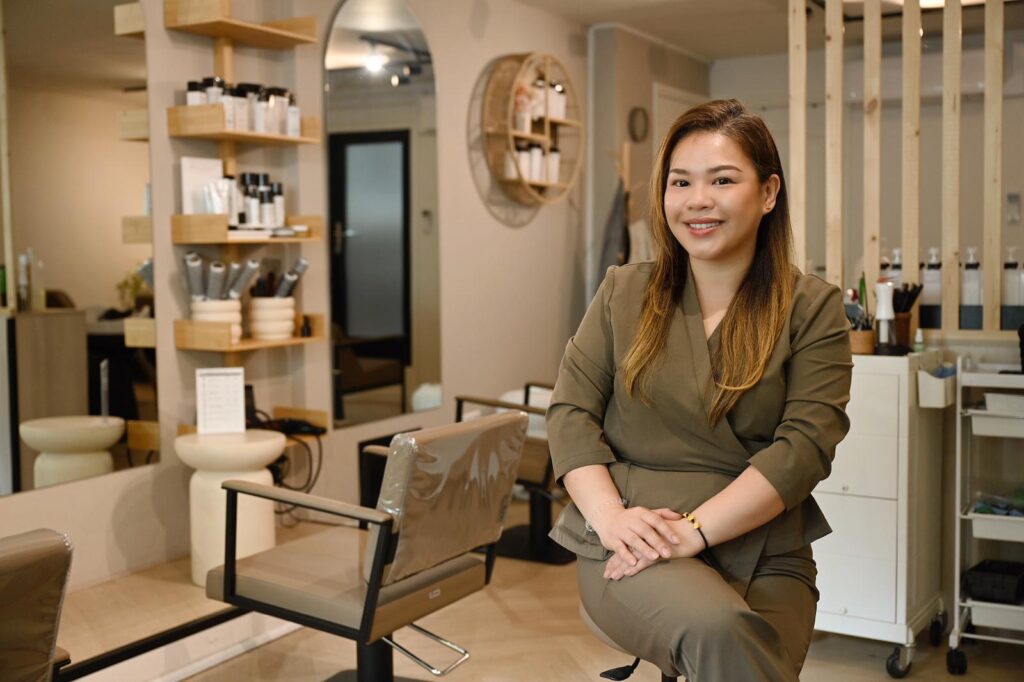
You could almost say that Cindy was born with a hairdresser’s scissors in her hand. Her mother was a hairdresser in Chinatown, Rotterdam, and also lived in the neighborhood. As a little girl, Cindy would already roam around the salon. Everyone thought: she will probably become a hairdresser too someday. But this was not on the mind of Cindy yet.
Only after when she went to Hong Kong to learn more about hairstyling, she must admit that this fits her very well. When she returned to Rotterdam, her mother immediately involved her in the salon and eventually handed over the business to her. Since then, Cindy has been running her own salon in Chinatown. Despite her relatively young age, she has been an independent entrepreneur for over fifteen years, and she greatly values that freedom, to decide how she runs her business, on her own terms.
Chinatown feels like home to Cindy. That’s why she has always stayed nearby, even though she has moved locations several times. For the past two years, she has been at her ideal spot: at the beginning of Chinatown, in a space that perfectly reflects what she wants to offer her clients, luxury and quality.
Cindy wants to get rid of the image of the “cheap Chinese hairdresser.” Her salon, CiLi, can compete with the higher-end segment. As soon as you step inside, you feel that you are getting the best treatment here. The interior is stylish and minimalist, but not cold. The products she uses are high quality and imported from Japan. She creates a calm, safe atmosphere where clients can truly relax after a busy workday or week. For example, she introduced Headspa to her salon, a treatment still quite new in Rotterdam. Because your scalp deserves good care too.
Her client base is diverse: at least thirty percent are non-Asian. What makes CiLi extra special is that Cindy speaks several languages: Mandarin, Cantonese, Dutch, and English. This makes her salon a great option for young Chinese-Dutch people who don’t get their thick Asian hair cut well in regular salons and encounter language barriers in traditional Chinese salons. At Cindy’s, you can get almost anything done, except afro hairstyles.
———-
Lizhu en Marco – St. Anny food
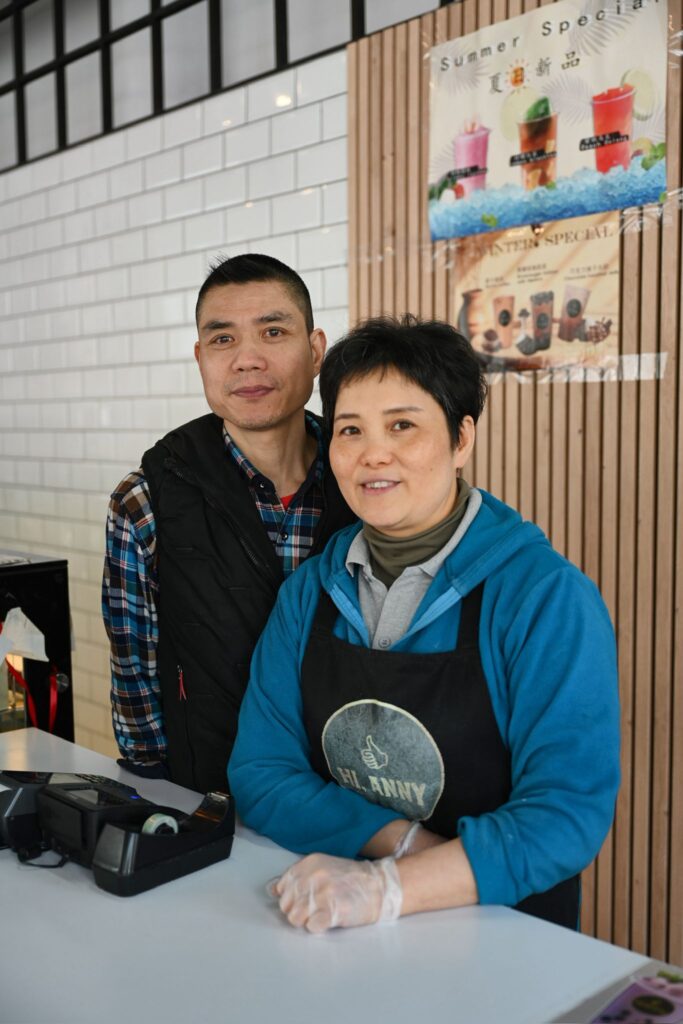
St. Anny Food has been an institution on West Kruiskade for as long as anyone can remember. There used to be another Chinese bakery across the street, Mei Sum, but that one disappeared. St. Anny Food remained. For more than forty years. Four decades long, Chinese people from across the country have come to Rotterdam to buy their favorite pastries here. Sometimes even bringing stacks of pastry vouchers for weddings, a cherished tradition in the Chinese community. Generations have grown up with St. Anny’s Food lightly sweet bread rolls. It’s a well-known name in the city.
In 2012, Marco and Lizhu took over the business. They became the so called third generation of owners, starting almost from scratch. How they suddenly began running a Chinese bakery? It was a mix of chance and courage.
Marco and Lizhu come from Wenzhou, China, and first moved to Portugal. They didn’t quite feel at home there. The Netherlands seemed like a better place to give their children a future. Not long after settling here, they heard that St. Anny Food was for sale. With no baking experience but a lot of determination, they took it over. They learned everything from the previous owner. It was hard work, but they made the craft their own.
Their pastries remain popular, flying off the shelves like hotcakes. They’re open seven days a week, starting at seven in the morning with the preparations. Freshness is a top priority, because true lovers of good food can tell right away if something isn’t fresh.
Marco and Lizhu have two adult sons who are studying, but when needed, they help out in the bakery. It feels warm and familiar: children supporting their parents, knowing how much effort it takes to run a business. They also bring in new ideas from time to time. Occasionally, you’ll find surprises in the display case: an Oreo cake roll, a creamy egg tart, or one of the many varieties of bubble tea now part of the menu.
While many of the pastries look similar to those found in other Chinese bakeries, Marco and Lizhu stand out by offering authentic Wenzhounese specialties. Like zongzi, sticky rice parcels with typical Wenzhounese filling, made by fellow Wenzhounese people and available almost year-round.
Even non-Chinese customers have discovered the zongzi. “You have to try the one with egg yolk,” Marco says with a warm smile. Just as recognizable as the smell of freshly baked pastries at St. Anny.
———-
Sam – Kampong express-Super crepe
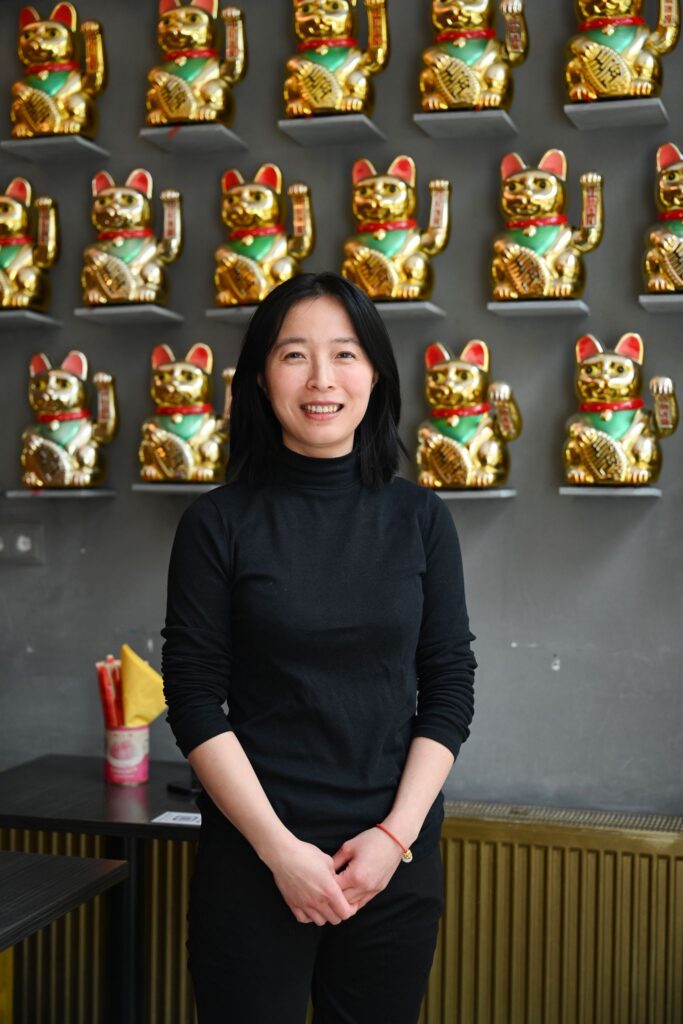
Tingjun, better known as Sam, came to the Netherlands at the age of thirteen. She left behind her beloved Fuzhou to reunite with her parents. Everything was new, different. But Sam adapted. She later graduated as an industrial designer, though she never truly felt called to pursue that path.
Her parents were well-known figures in the Chinese hospitality world. As host and hostess in prominent dim sum restaurants in Rotterdam and The Hague, they welcomed generations of guests with warmth and grace. That Sam would one day open her own restaurant wasn’t something she had planned.
Encouraged by those around her, she rented one of the tiniest storefronts on West Kruiskade. She didn’t have a business plan, just a spark of inspiration. There, she opened Super Crepe, a tiny eatery with a big heart. Her specialty: jianbing — a Chinese egg-based pancake wrapped around fresh greens, meat, and a boldly flavored sauce. In 2018, Sam may have been the first to bring jianbing to Rotterdam — maybe even to the Netherlands.
It was likely her creative mind that led her there. Jianbing is beloved street food in China: fast, affordable, and bursting with flavor. Sam returned to China to learn how to make it properly. She chose a northern variation, not the version she grew up with, but one she had grown to love even more. She adapted the sauce slightly for the local palate, less intense, but still rich in flavor.
Slowly, her little shop began to outgrow itself. And though the pandemic briefly paused her momentum, her business found new life in a larger location, eventually blossoming into a true foodie’s haven.
Since 2021, Super Crepe has merged with Kampong Express, a street food concept inspired by the Malaysian kitchen. When Sam took over the new space, she made sure to keep it alive and it turned out to be a perfect pairing. Today, people come from all over to taste her jianbing, as well as the fragrant Hainan Chicken and the spicy Laksa noodle soup.
The place is still modest in size, but big in atmosphere. People are happy to wait in line. Inside, it’s cozy, sometimes you’re sitting shoulder to shoulder, almost close enough to share a stranger’s plate. But no one minds. There’s a warmth here, a sense of ease, a feeling of being transported somewhere far away, yet somehow completely at home.
And that’s exactly what Sam hoped to create.
———-
Ching Man & Qiu Yan – Little Shokudo (formally Set noodle)
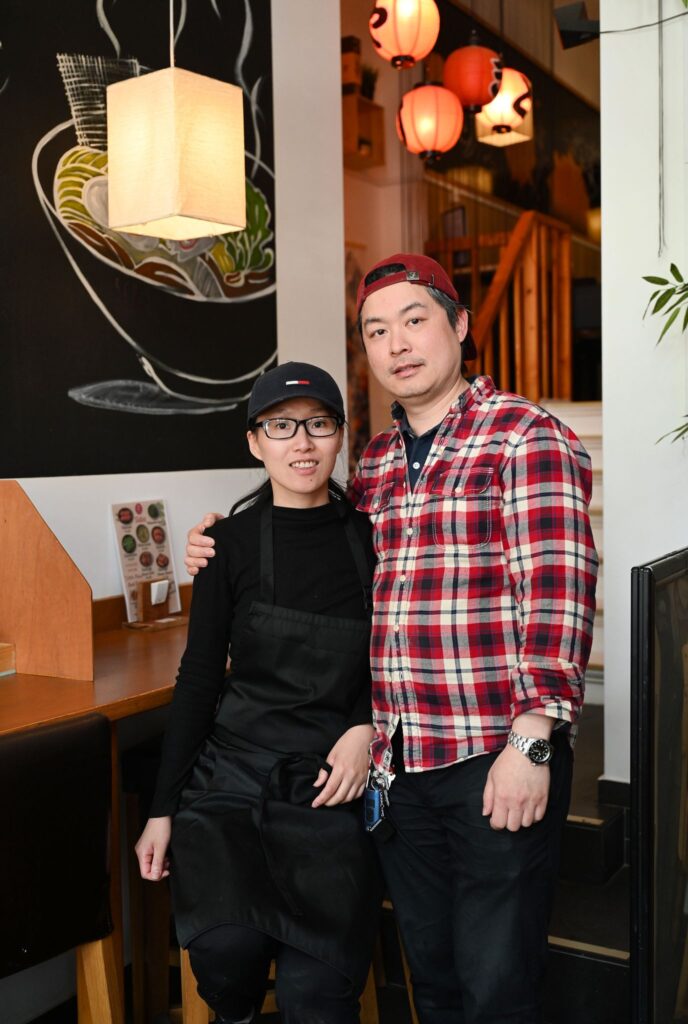
It was the summer of 2017 when Ching Man and Qiu Yan took over Set Noodle — part of a franchise. Ching Man is a born-and-raised Rotterdammer whose parents, like many Chinese families, ran a takeaway restaurant — first in Katwijk, later in Leiden. As a child, he lived in Hong Kong for a while before returning to the Netherlands, where he grew up surrounded by the hustle and bustle of his parents’ business.
He graduated with a law degree, but never pursued a career in it. Perhaps the pull of hospitality ran too deep in his veins. He found his way into the industry through an all-you-can-eat Japanese sushi restaurant, where he learned the ropes. So when the opportunity came to take over Set Noodle, he grabbed it with both hands. Together with his wife, Qiu Yan, he started a new chapter: running their own restaurant — in a type of cuisine that was still unfamiliar to him. After all, ramen and noodles are something entirely different from sushi.
When they took over, he learned the menu inside and out — and how to prepare it. Everything he had once picked up from his father and other family members, he now also applied to his own business. His goal is to make the restaurant increasingly personal and to keep developing and refining the recipes. In 2025, that vision will become reality: Set Noodle will become Little Shokudo — Japanese for “small, homely dining room.” That’s the atmosphere and taste Ching Man and Qiu Yan want to create.
From the outside, Little Shokudo looks like a modest eatery. But once you step inside, you immediately notice a staircase leading up and more tables than you’d expect. It feels like every corner has its own character. Qiu Yan is the host, warmly welcoming guests almost daily. Her quiet, modest presence hides just how hard she really works.
Together, they run the restaurant the best they can. They work hard, day in day out — because this is their passion. Soon, they’ll say goodbye to ready-made teriyaki sauce. From that point on, only their own home-made recipe will be served — another step in making their restaurant truly their own.
*****